This page focuses on program decisions and tradeoffs. For the durable technical framework, read Shapewear Compression Levels: From Smoothing to Extra Firm.
BUYER TAKEAWAY
Light, medium and firm are useful merchandising terms, but they are not universal technical standards. Define the desired on-body result, fabric and panel behavior, then approve it through fit, wear and wash testing on the intended size range.
01
Treat control level as a product brief, not a label
Two suppliers can call different garments “firm control.” Perceived compression changes with fabric modulus, pattern reduction, panel placement, seams, bonding, elastic, closures and the wearer's body shape. A B2B specification should therefore describe the target result and construction rather than relying on a single adjective.
If your product makes therapeutic or medical compression claims, general shapewear language is not enough. Pressure measurement, evidence, labeling and destination-market requirements need specialist review.
02
A practical control-level framework
Use the framework below to align merchandising, development and factory teams. Final approval should always come from physical samples.
| Level | Typical customer promise | Common construction direction | Best suited to |
|---|---|---|---|
| Light | Gentle smoothing with easy wear | Soft stretch fabric, fewer reinforcement panels | Daily basics, first-time users, layering |
| Medium | Visible smoothing and targeted shaping | Balanced stretch, zoned panels, stable waist and leg finishes | Core shapewear ranges and repeat wear |
| Firm | Strong hold and defined shaping | Higher-resistance panels, structured seams or closures | Curve programs, occasion and specialist silhouettes |
03
Construction can change control without changing the fabric
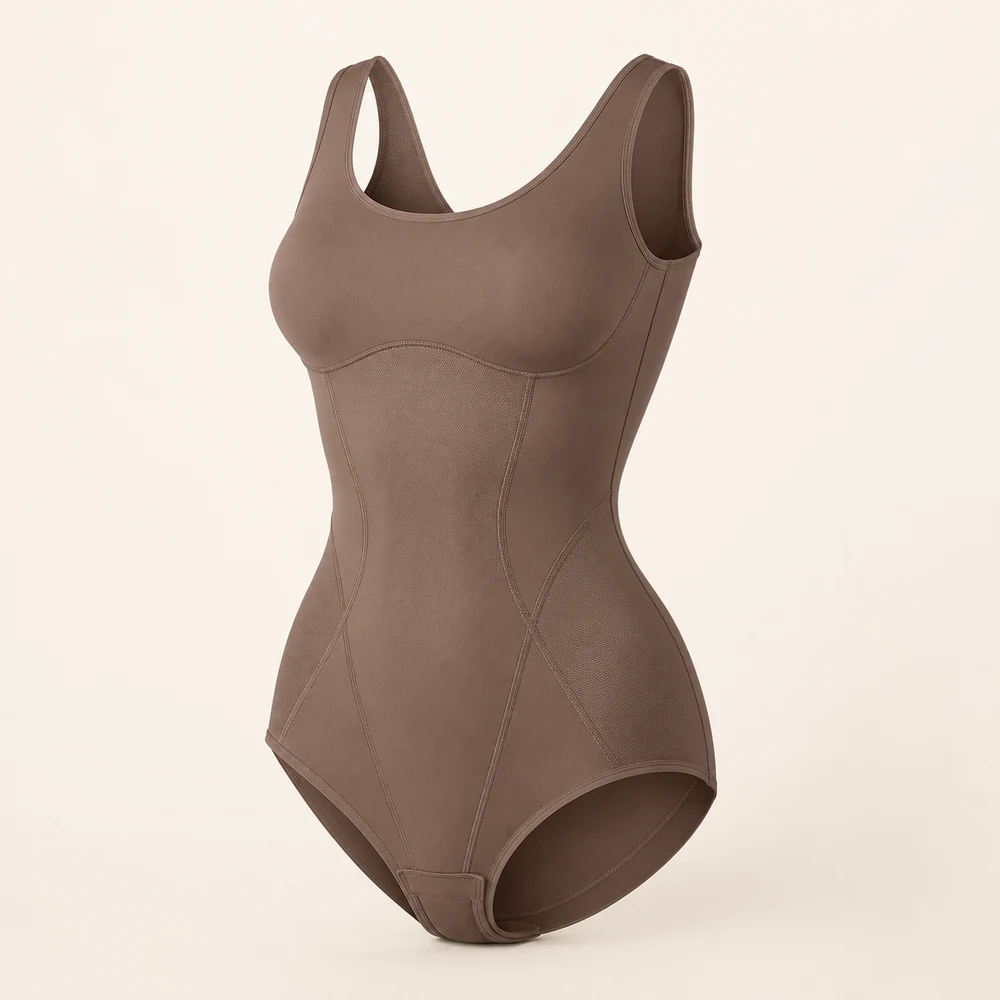
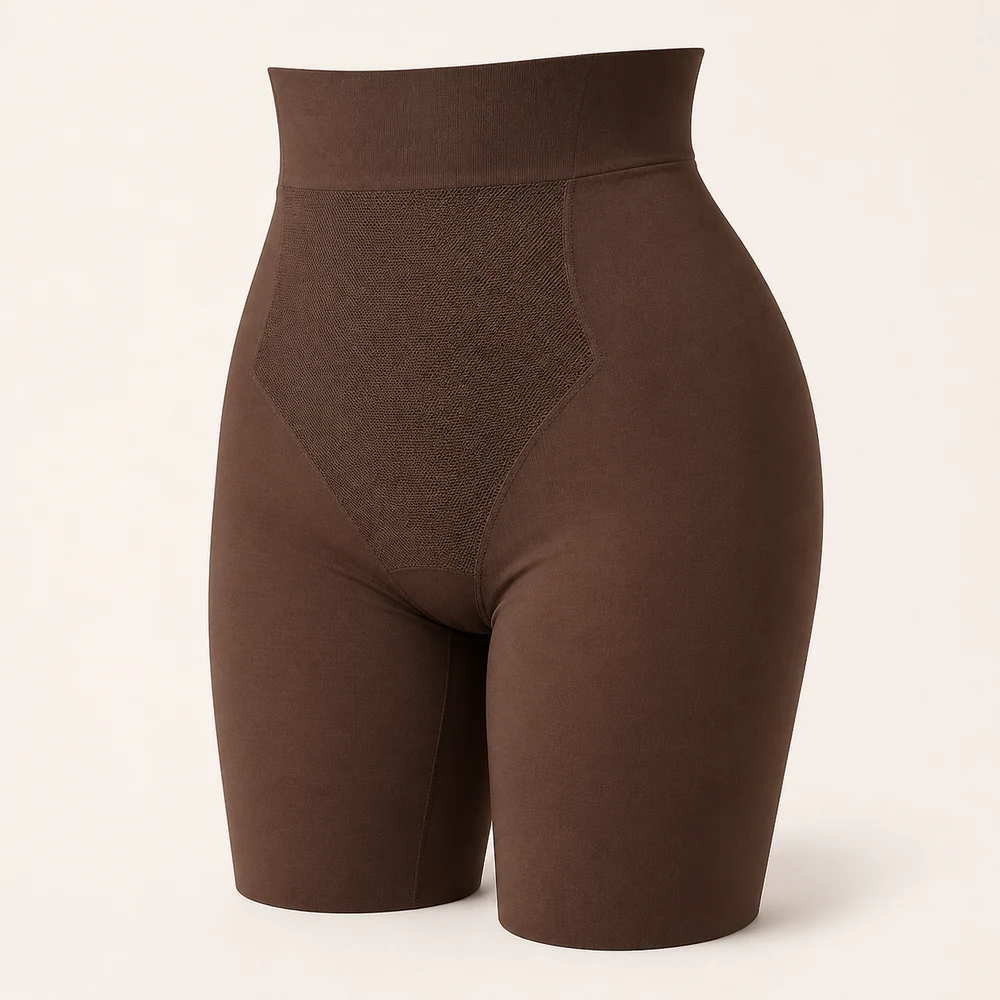
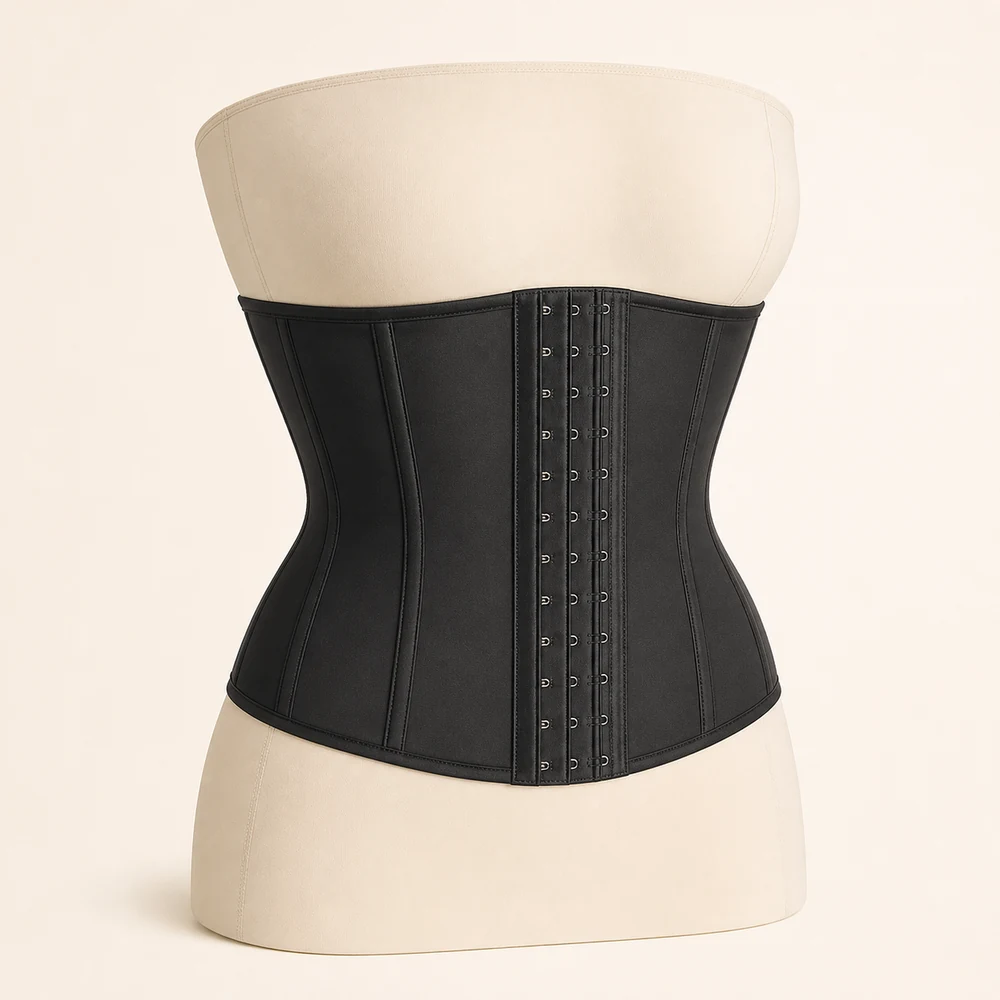
A stable power-mesh panel placed over the abdomen can make a garment feel much stronger than the same base fabric used alone. Double layers, bonded zones, waist elastic, boning and hook-and-eye closures also change hold, entry and comfort. Ask for a panel map and sample review rather than choosing fabric by composition alone.
04
Approve control across the complete size range
A base-size sample cannot prove performance for every size. Review ease, garment measurements, stretch recovery, seam strain, rolling, digging and freedom of movement on multiple fit models. Repeat the test after laundering because heat, moisture and repeated stretch can change the result.
- Define target zones and zones that must remain flexible
- Compare the garment with an approved benchmark sample
- Record donning difficulty, comfort and visible smoothing
- Check roll-down, leg cutting, seam stress and closure pressure
- Re-test after the agreed wash cycle
Buyer FAQ
Is firm-control shapewear always better?
No. The right level depends on the customer, wear occasion, climate, garment design and comfort target. Excessive hold can reduce usability and repeat purchase.
Can fabric composition prove the compression level?
No. Composition does not show knit structure, weight, stretch resistance, pattern reduction, paneling or finishing, all of which affect control.
How should a buyer approve compression?
Use an agreed benchmark and approve physical samples through garment measurement, multi-size fit, wear, recovery and wash testing.